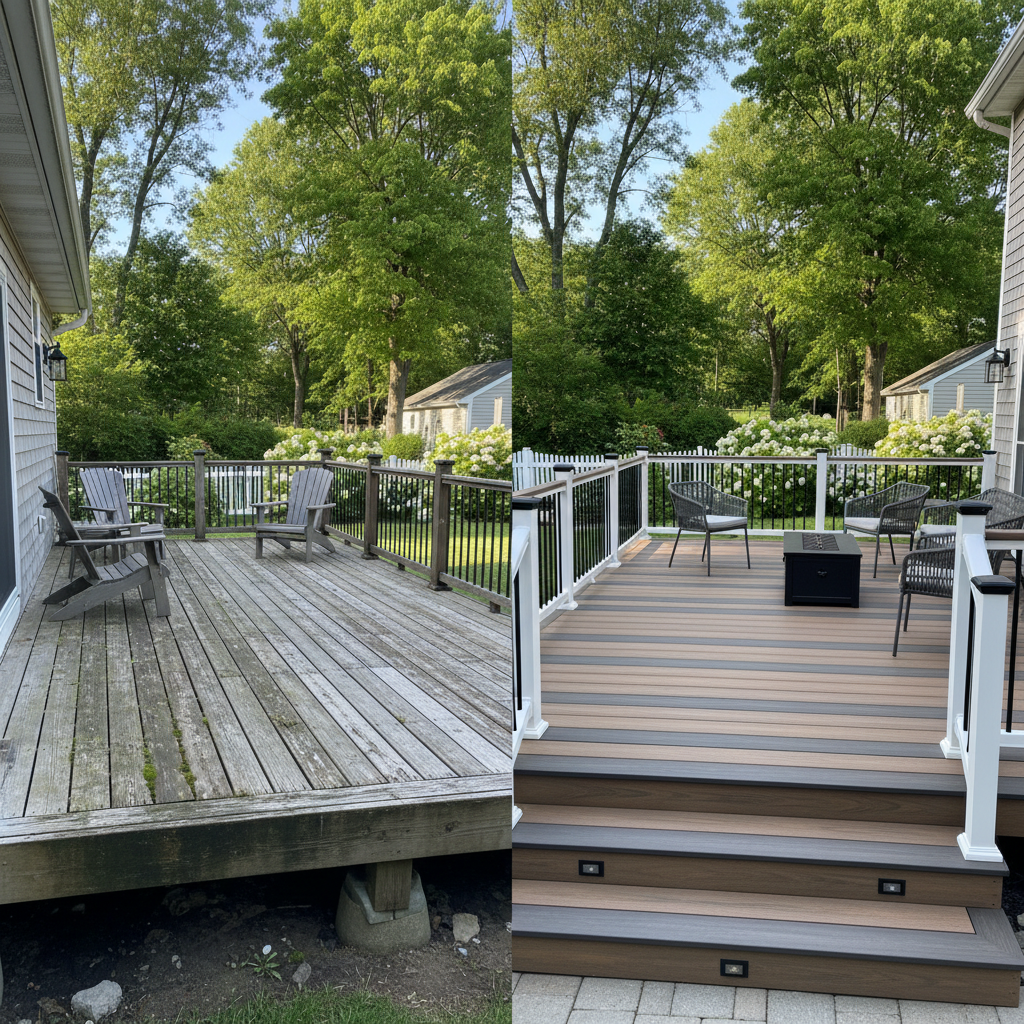
When you're looking at composite decking for your home, you'll quickly run into two main types: capped and uncapped. I see a lot of folks get confused here, and it's a pretty important distinction, especially with the kind of weather we get around Pleasant Valley. Let's break it down so you can make an informed choice.
What's Uncapped Composite Decking?
Uncapped composite was the original stuff, the first generation. It's usually a blend of wood fibers (like sawdust) and recycled plastic. The idea was great: take waste materials, make something durable, and cut down on maintenance compared to wood. And it did that, mostly.
The main thing to know about uncapped composite is that its surface is exposed. It's porous. Think of it like a dense, manufactured wood product. Because of that, it can absorb moisture, and it's more susceptible to things like mold, mildew, and staining. You'd often see these decks fade over time, sometimes unevenly, and they could get pretty slippery with algae if not cleaned regularly. They also tended to scratch easier.
Enter Capped Composite Decking
Capped composite is the second generation, and it's what most people are talking about when they say "composite deck" today. It takes that same core of wood fibers and plastic, but then it adds a protective shell – a cap – around three or four sides of the board. This cap is usually made of a different, more durable polymer material.
Think of it like a candy bar with a hard shell. That shell is designed to be impervious to moisture, stains, and fading. It's a game-changer for durability and looks.
Cost: What's the Damage?
Let's talk money, because that's always a big factor. Generally speaking, uncapped composite is going to be less expensive upfront. You might save a dollar or two per linear foot compared to capped options. For a decent-sized deck, that can add up to a few hundred or even a thousand dollars in material costs.
Capped composite, with its advanced technology and better performance, comes at a higher price point. It's an investment, no doubt about it. But here's where you need to think long-term. That upfront saving on uncapped might cost you more in cleaning products, pressure washing, and even potential replacement sooner down the line if it degrades.
Durability & Maintenance: The Real Difference
This is where capped composite really shines, especially for us in Pleasant Valley. We get everything from scorching summer sun to heavy snowfalls, and that freeze-thaw cycle can be brutal on materials. Plus, if your home is tucked into one of those wooded lots near Tymor Park, you know all about shade and moisture.
- Uncapped: It's durable compared to some woods, but its porous nature means it'll absorb moisture. That leads to mold and mildew, especially in shady, damp spots. It'll also fade significantly over time, and scratches are more noticeable. You'll need to clean it pretty aggressively, probably with a pressure washer and special deck cleaners, at least once a year.
- Capped: This stuff is built to last. The cap acts as a shield. It resists fading remarkably well, shrugs off stains from spilled wine or BBQ grease, and is far less prone to mold and mildew because water just beads up and runs off. Scratches are much harder to inflict and less visible. Maintenance? A simple wash with soap and water, maybe a soft brush, is usually all you need. You won't be spending your weekends scrubbing your deck.
Appearance: Looks Matter, Right?
When uncapped composite first came out, it looked pretty good, but the colors were limited and often had a more uniform, plastic-y look. Over time, that fading really impacts the aesthetic.
Capped composite has come a long, long way. Manufacturers like Trex and TimberTech have developed incredible finishes that mimic natural wood grains, often with multi-tonal streaking that looks incredibly realistic. The color options are vast, and because they resist fading so well, your deck will maintain that beautiful appearance for years and years.
My Recommendation for Pleasant Valley Homeowners
Look, I've built a lot of decks in this area, and I've seen how they hold up. For homeowners in Pleasant Valley, my strong recommendation is to go with capped composite decking. Yes, it's a bigger investment upfront, but the long-term benefits are undeniable.
The reduced maintenance alone is worth it. You'll spend less time cleaning and more time enjoying your deck. The superior durability means it'll stand up to our New York weather – the humidity, the snow, the sun – without breaking down, fading, or getting covered in mildew. And honestly, the aesthetic quality of modern capped composite is just fantastic. It'll boost your home's curb appeal and give you a beautiful outdoor living space that truly lasts.
At Mighty Deck Solutions, we work with both, but we always guide our clients toward what we know will perform best for them in the long run. You want a deck that you can enjoy, not one you have to constantly worry about. Capped composite delivers on that promise.